
About
A decade in the making. Still in motion.
Whiria Ngā Ara is not the product of a single project or a single team. It has emerged through a decade of research, practice and relationship — drawing together strands of evidence and insight from Ngā Pūkenga, Whānau Ora practitioners, Iwi, philanthropic organisations, and funded research. Many people have contributed to what it is today, and we acknowledge them with deep respect and gratitude..
~10
Years of development across
research, evaluation and
practice
4
Distinct strands of work that converged to produce the framework
Many
Contributors, collaborators and communities whose mahi is woven through this work
where it comes from
Not one project.
A convergence of work.
Whiria Ngā Ara emerged from a question that kept surfacing across different settings: why do some investments in social change produce results far beyond what the activity itself would predict, while others – equally well-intentioned and carefully delivered – produce little durable impact at all?
The answer, we came to believe, lies in the configuration of effort rather than its individual parts – in whether investment is reaching the upstream determinants that activate and sustain change, not just the downstream conditions that relief and stabilisation address.
That inside did not arrive fully formed. It accumulated across nearly a decade of engagement with multiple bodies of work – each contributing something the others could not provide alone. The framework represents the convergence of those strands, and bears the marks of every collaboration, evaluation and conversation that shaped it.
We are continuing to develop the intellectual and methodological foundations – and to test and refine the architecture through application. What exists now is robust enough to be useful. It is also still evolving.
He Ara Waiora
A reconceptualisation of wellbeing and value creation developed under the leadership of Ngā Pākenga Māori – contributing foundational architecture for thinking about how human flourishing occurs across interconnected conditions rather than isolated domains.
Whānau Ora practice and evaluation
A decade of evaluation work alongside Whānau Ora practitioners – whose transformative work with whānau provided the empirical basis for understanding how trajectory change occurs, and what activates and sustains it across multiple domains of life.
Impact strategy work with Iwi and philanthropy
Working alongside Iwi and philanthropic entities on their investment and impact strategies – testing the architecture in real settings, and refining it through the practical challenge of making investment decisions with a complex causal landscape.
HRC-funded research
A Health Research Council funded project exploring the causal mechanisms of kaupapa Māori wellbeing initiatives – providing the most direct empirical examination of how and why change occurs within the framework’s core domain.
These strands are not simply additive – they informed each other. The empirical observations from Whānau Ora practice raised questions that the He Ara Waiora conceptual work helped answer. The investment strategy work surfaced practical demands that the research had to meet. The HRC research provided rigour that strengthened every other application. The framework is the product of that conversation between strands.
acknowledgements
Many have contributed to this work.
Whiria Ngā Ara is the product of collective mahi. The framework has been shaped by many people across many settings, and it would be neither accurate nor appropriate to present it as the product of any single team or institution. We acknowledge the contributions of those who made it possible with deep respect.
The intellectual foundations draw most directly on the work of Ngā Pūkenga Māori who led the development of He Ara Waiora – a reconceptualisation of wellbeing whose influence on this framework is profound and foundational. Their insight that wellbeing is constituted through interconnected conditions, and that the upstream determinants of human potential must be named and understood rather than assumed, runs through everything we have built.
The empirical heart of the framework comes from Whānau Ora practitioners – the navigators, the kaimahi, the organisations and the leaders who did the transformative work with whānau from which so much of the evidence base was drawn. What we observed was their mahi. What we learned, we learned from them.
The Iwi and philanthropic organisations who worked with us on their impact strategies pushed the architecture from concept toward practice – asking hard questions about what the framework could actually do, and whether it was useful in the settings that mattered most.
And the communities and whānau who participated in the HRC-funded research contributed something that no literature review could provide – a grounded account of how change actually unfolds in people’s lives.
Ngā Pūkenga Māori
The intellectual leadership behind He Ara Waiora, whose foundational reconceptualisation of wellbeing underpins the Whiria Ngā Ara architecture.
Whānau Ora practitioners
Navigators, kaimahi, organisations and leaders whose transformative work with whānau provided the empirical basis from which the Kawa determinant pathway and the trajectory shift approach were developed.
Iwi and philanthropic partners
Organisations who worked alongside us on impact and investment strategy – testing the framework in practice and shaping the tools through their real-world demands.
HRC research participants
Communities and whānau who participated in the Health Research Council funded research, contributing grounded knowledge of how kaupapa Māori wellbeing initiatives create change.
A note on acknowledgement
There are many individuals whose specific contributions deserve to be named. We are working on a fuller set of acknowledgements as part of the publication programme currently in development, and we are committed to ensuring that credit is attributed accurately and generously.
the team
The core team and our wider network
The core team currently working with Whiria Ngā Ara brings together research, practice and strategic experience. We work alongside a wider network of research and practice associates who contribute expertise across specific applications, domains and communities.
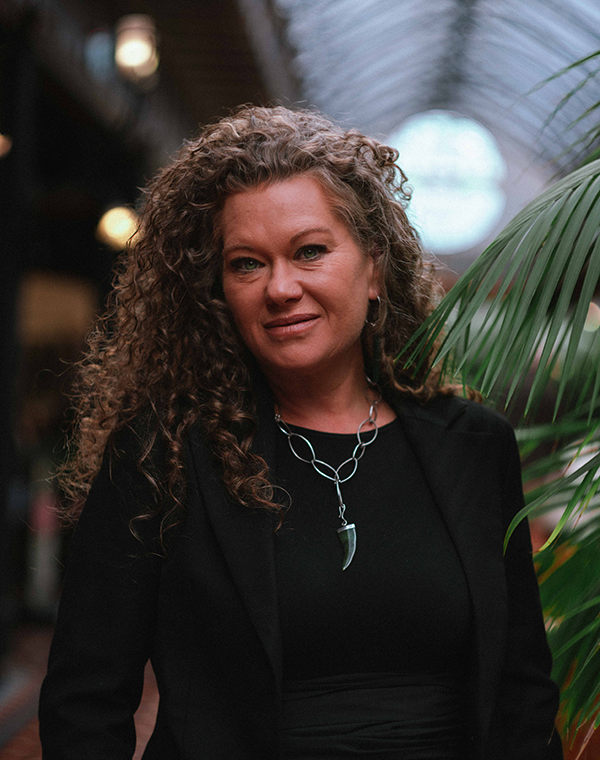
Sacha McMeeking
ASSOCIATE PROFESSOR
Leads the research and intellectual development of Whiria Ngā Ara. Sacha’s work sits at the intersection of Māori development, social policy and impact measurement – bringing together the theoretical architecture and the empirical evidence base that underpins the framework.
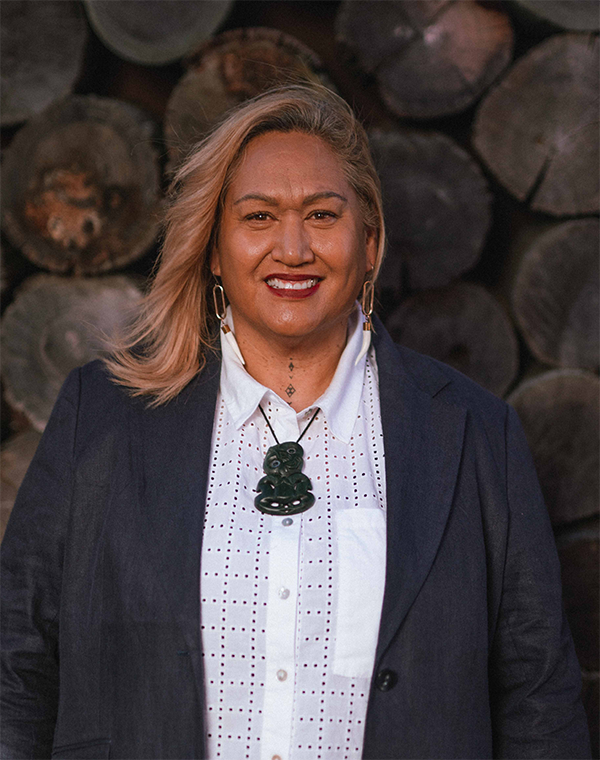
Cazna Luke
CORE TEAM
Brings deep practice knowledge and strategic experience developed through decades of contribution to the Māori health sector. Cazna’s long engagement with the realities of service delivery, system navigation and community impact has been central to translating the Whiria Ngā Ara architecture into tools and applications that work in the settings that matter most.
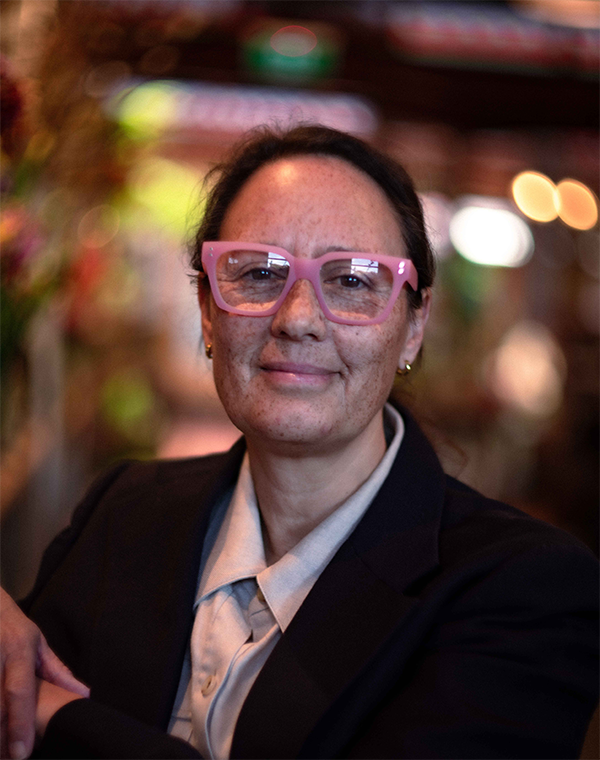
Janyne Morrison
CORE TEAM
Brings deep insight into the nature of development and the lived experience of trajectory shift across Iwi, hapū, community and individual levels. With a background in human resources and capability development, Janyne contributes a practitioner’s understanding of how people actually engage with frameworks and tools – shaping the user experience and applied value of Whiria Ngā Ara from the inside out.
We work alongside a network of research and practice associates who contribute expertise across specific domains, communities and applications. Associates are engaged on specific projects and bring depth in areas including kaupapa Māori research methods, social policy, health systems, community development, commissioning and quantitative social research. If you are interested in working with us as an associate, please get in touch.
our structure
A framework in search of it’s right home.
Whiria Ngā Ara has been developed across a range of institutional homes – hosted within university research, delivered through consultancy relationships, and advanced through funded research programmes. As the work has matured, so has the question of what kind of entity is the right vehicle to take it forward.
We are currently in the process of establishing fit-for-purpose entities that can hold this work with appropriate governance, ensure the intellectual foundations are properly attributed and protected, and sustain the long-term development of the framework, tools and research programme.
That process takes time when it is done well. We are committed to getting the governance and structure right – particularly in relation to Māori data sovereignty, the interests of communities who have contributed to this work, and the sustainability of the tools and research programme over time.
We will update this page as our structure is formalised. In the meantime, all enquiries – whether about the framework, the tools, research partnership, or working with us – are welcome through the contact form below.
Public launch – September 2026
The framework, tools and website launch publicly in September 2026. Entity structure will be confirmed and communicated at or before launch.
Publications programme
A suite of academic publications setting out the conceptual, empirical and methodological foundations is currently in development and will be released progressively from 2026.
Governance commitments
Our governance structure will reflect our commitments to Māori data sovereignty, appropriate acknowledgement of contributors, and the long-term public benefit purpose of the framework.
Enquiries welcome
While entities are being established, all enquiries about the framework, tools, partnership and collaboration are welcome through the contact form on this page.
get in touch
We would like to hear from you.
Whether you are exploring the framework for the first time, considering applying the tools, interested in partnership or research collaboration, or simply have questions – we welcome the conversation.